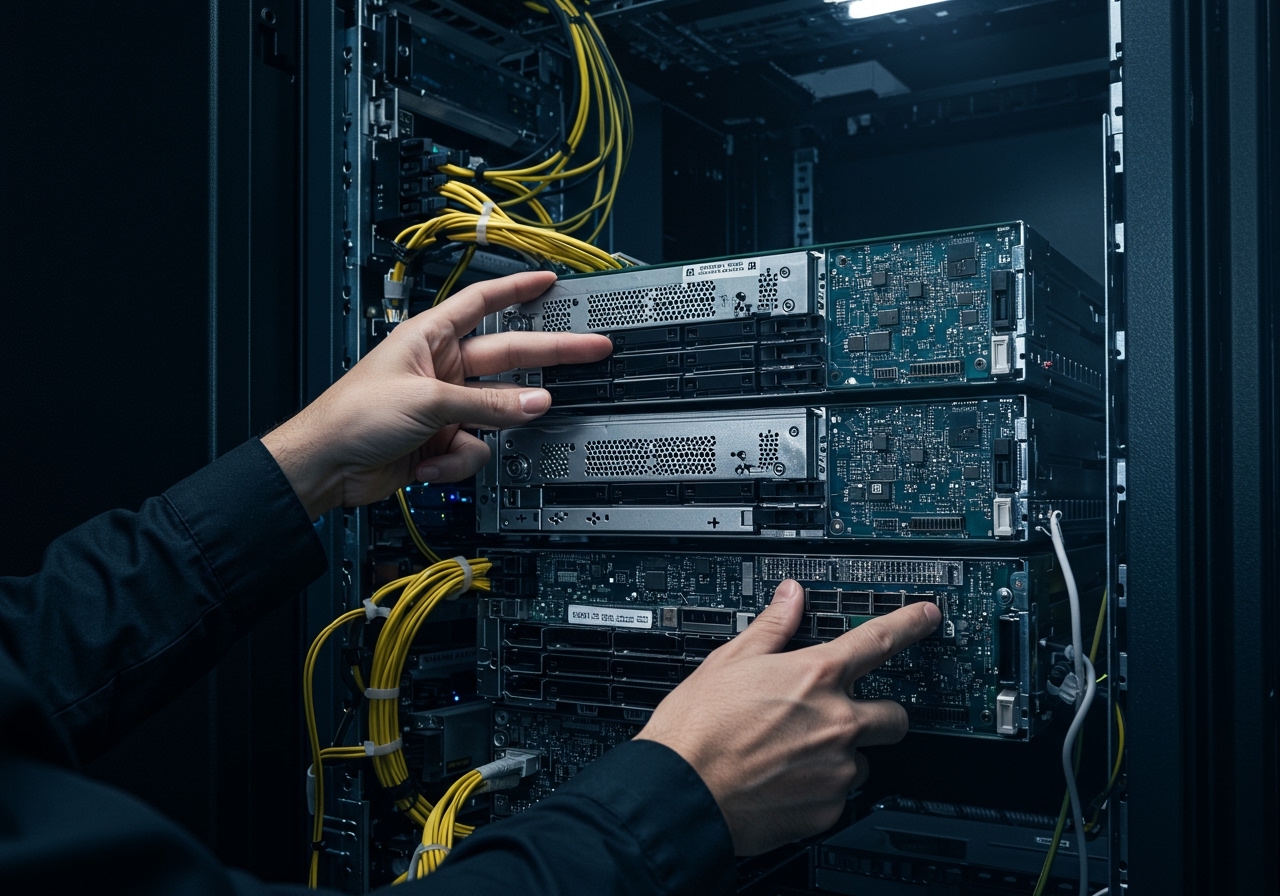
AI talent intelligence is starting to separate operators who can execute from those who cannot. Data center growth is accelerating, but hiring is not keeping pace.
This is especially important in data center growth, where many roles require a mix of engineering-first approach thinking and operational experience. When used correctly, predictive analytics reduces the time spent on manual candidate screening and improves consistency in evaluation.
That gap is getting more expensive.
Labor Gaps Are Slowing Infrastructure Execution
Data center operators are facing a tightening job market for skilled professionals across construction, engineering, and operations.
Roles in high demand include:
Construction managers with experience in large-scale builds
Supply chain experts managing complex equipment delivery
Engineers focused on energy systems and cooling infrastructure
Specialists working on PUE optimization and sustainability
The challenge is not just volume. It is timing.
By the time many firms move to hire, the available talent has already been absorbed by competitors or adjacent industries.
Early Movers Are Changing the Hiring Model
Some operators are adjusting early.
Instead of waiting for candidates to enter the market, they are investing in:
Apprenticeships to develop talent internally
Partnerships with technical schools and training programs
Reskilling opportunities for adjacent industries
Relocation incentives tied to specific projects
These strategies take time to show results. But they create a pipeline that is not dependent on the open market.
That difference is starting to show up in execution timelines.
Why Traditional Hiring Falls Behind
Traditional recruiting workflows were not built for this type of demand cycle.
They tend to rely on:
Reactive job postings
Narrow candidate filtering
Limited workforce visibility across industries
This approach works when supply is stable. It breaks down when demand spikes quickly. In the current environment, companies need a broader view of the workforce.
Without it, hiring becomes a bottleneck.
AI Talent Intelligence and Workforce Visibility
AI talent intelligence is emerging as a way to close that gap. It connects labor market data and job market data with real hiring decisions, giving operators a clearer view of where skills exist and how they can be deployed across HR systems.
Some teams are increasingly looking at platforms like Eightfold AI (eightfold ai) and other skills-based talent intelligence tools as an “agentic talent platform” layer that can support an AI-human workforce at scale.
Recruitment Intelligence™ is built around this idea.
Recruitment Intelligence™ is an AI-assisted recruiting platform that helps operators expand beyond traditional talent acquisition methods and identify top talent across multiple industries.
Instead of relying only on job postings, the platform uses predictive analytics to evaluate how candidate experience aligns with specific roles—often using deep-learning AI techniques to surface matches that manual screening would miss.
It focuses on:
Mapping skills-based talent intelligence across industries
Identifying transferable expertise in adjacent sectors
Improving workforce visibility beyond the immediate job market
Supporting smarter workforce decisions with structured insights
Enabling responsible AI practices, including bias mitigation, so evaluation is more consistent and merit-based hiring is easier to enforce
This allows hiring teams to move faster without increasing risk—and helps organizations see how to upskill employees into roles where they can reach their full potential.
Predictive Analytics Is Changing Candidate Evaluation
Predictive analytics is playing a larger role in how hiring decisions are made.
Rather than evaluating candidates based only on past titles, systems can now assess:
How similar roles have performed in comparable environments
How experience translates across industries
Which profiles are most likely to succeed in specific conditions
In some workflows, AI agents (ai agents) can also automate parts of the process—like shortlisting, outreach, and scheduling—while keeping humans in control of final decisions (an AI-human workforce model rather than an “infinite workforce” replacement narrative).
This is especially important in data center growth, where many roles require a mix of engineering-first approach thinking and operational experience. When used correctly, predictive analytics reduces the time spent on manual candidate screening and improves consistency in evaluation.

The Rise of New Infrastructure Roles
The next phase of data center expansion is also creating new categories of work.
Among the most constrained areas:
Sustainability-focused roles tied to PUE optimization
Engineers working on advanced cooling systems
Professionals managing energy integration with local grids
These roles are not always visible in traditional recruiting systems. They often sit at the intersection of industries, which makes them harder to identify using standard filters.
That is where broader profile scanning becomes valuable—especially when paired with tools like an AI interviewer, structured scorecards, and workforce visibility views that help hiring teams compare candidates more consistently.
The Competitive Advantage Is Speed
In power-rich regions where data center growth is concentrated, speed is becoming the defining factor.
Companies that can hire faster:
Secure talent before competitors
Maintain uptime and project timelines
Reduce delays tied to labor shortages
Those who cannot fall behind, even if capital investment is available. The difference often comes down to how quickly hiring teams can move from identification to decision.
Some organizations are standardizing these workflows on a single AI platform, sometimes described as agentic AI for recruiting operations, with governance guardrails that support global governance requirements and strict security standards.
What This Means for Talent Leaders
For talent leaders, the shift is clear. Hiring is no longer just about filling roles. It is about enabling execution.
That requires:
Better integration of artificial intelligence into hiring workflows
Stronger alignment between talent acquisition and business strategy
A focus on skills-based talent intelligence rather than static resumes
Clear operating models (for example, an “eightfold blueprint” style framework, a flagship talent program, or even internal dashboards like a TA Eightfold Talent Table) that connect hiring, internal mobility, and reskilling opportunities
For regulated environments, these considerations can extend to security and compliance language as well—especially for U.S. federal agencies evaluating vendors that are FedRAMP Moderate Authorized, and teams aligning to an international management system standard such as IEC 42001:2023 certification.
The goal is not to generate more candidates. It is to identify the right ones earlier—so talent leaders can secure top talent and improve human performance in execution-heavy environments.
The Bottom Line
Data center growth is not slowing down. The demand for infrastructure continues to expand. But labor gaps are becoming a defining constraint.
AI talent intelligence is emerging as a way to reduce that constraint by improving visibility, accelerating hiring decisions, and expanding access to the workforce.
Companies that move early are gaining an advantage. Others are still trying to catch up.